Women as mothers and caretakers have always been seen as a fundamental part of society. To some, it is only natural that women provide caring and empathetic counterpoints to stoic male dominance. In a four-part series for The New York Times, Facebook CEO Sheryl Sandberg and University of Pennsylvania professor Adam Grant dissect women's roles in the workplace. Sandberg, known for her book Lean In, promotes women actively taking leadership roles in the workplace. Additionally, she urges men to take on supportive roles and be more aware of difficulties for women. In the piece "Madam C.E.O., Get Me a Coffee," Sandberg and Grant argue that women do more work than men, but are somehow rewarded less. To present their points, Sandberg and Grant use a diverse array of research studies, expert opinions, and anecdotal evidence, which strengthens their argument.
Sandberg and Grant cite a study done by a New York University psychologist to appeal to their audience's logos. The study used objective measurements to present the differences in how people perceive their men and women co-workers. To explain why such discrepancies exist, Sandberg and Grant quote a Harvard professor, who observed that women do what is termed "office housework," administrative duties that often go unnoticed or unappreciated. Another study from a University of California Hastings professor supports this finding. All of these studies return to Sandberg and Grant's point that women are overworked in the workplace. It also makes their hotly debated argument more logical and objective.
In order to appeal to their audience's ethos, Sandberg and Grant also include anecdotes from women in the workplace. They use narrative to describe one woman's efforts, only for them to culminate in nothing. This source humanizes their argument and also provides a moment for readers to connect personally with the central claim.
Overall, Sandberg and Grant deliver a well-rounded array of sources to support their arguments.
Friday, February 26, 2016

Sunday, February 21, 2016
TOW #18 - Hamilton (Visual)
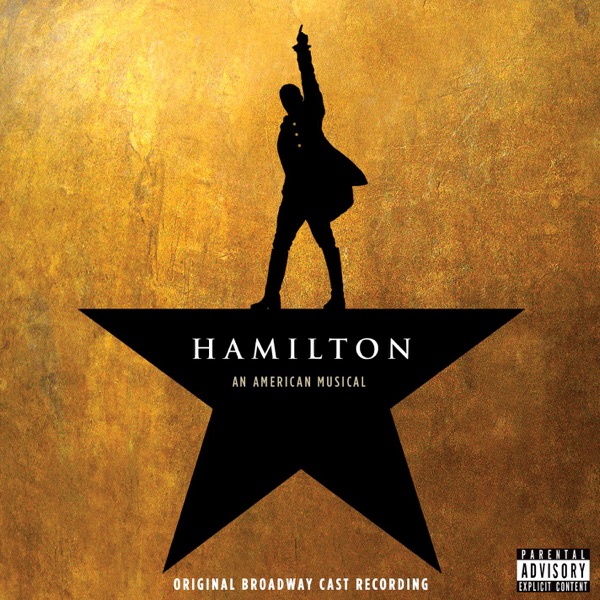
Hamilton, created by Lin Manuel Miranda, subverts the typical narrative of American history, which is so often populated by white men and their accomplishments. Both the cast and soundtrack resist the status quo of Broadway and society by including a nearly all people of color cast (quite fittingly, the only white man plays King George) that does almost the entire soundtrack in rap. Such changes provide new representation and nuance to Broadway. The revolutionary struggle of the American colonies takes on fresh meaning when played by people of color, who struggle against oppressive power structures in the 21st century as well. The album cover of the soundtrack reflects the musical's effort to bring people from the shadows into the spotlight.
Most biographies depict their subjects on the cover of their works. Interestingly, Hamilton does not depict a specific face or person. The silhouette of Hamilton on the front cover suggests an ambiguity about his person. Anybody, not just a white man, can be Hamilton. Anybody, not just a white man, can parallel his life story. This artistic choice introduces the subversive narrative in the lyrics of the soundtrack. Angelica Schuyler, sister of Hamilton's wife Eliza, sings, "You want a revolution? I want a revelation / So listen to my declaration / 'We hold these truths to be self-evident / that all men are created equal.' / And when I meet Thomas Jefferson / I'ma compel him to include women in the sequel." Hamilton is not a straight biography of the Founding Father, but includes plenty of editorializing to make the musical more reflective of the demand for social progress in the 21st century.
Additionally, the upper left hand corner of the cover mimics the lighting of a spotlight being cast on Hamilton. Like the silhouette, this also highlights a purpose of the musical: to shed new light (pun intended) on the Founding Father. In the musical, Angelica says, "Every other Founding Father's story gets told. Every other Founding Father gets to grow old." Hamilton and his contributions are not as well known as, say, Washington's or Jefferson's. The musical is intended to educate audiences about Hamilton's life and accomplishments. In doing so, they bring a man relegated to the backdrop into the foreground. The spotlight on the cover indicates the cast's intentions for the musical.
Most beautifully, Hamilton has reminded audiences that art can be found anywhere. Most Americans would never have though to be moved by a musical about a Founding Father. Yet, Hamilton takes people on an emotional journey of laughter and tears. No one would ever think to make a Broadway musical using rap either, but Miranda reminds us that artistic genius** lives in even the most hidden places. The simplicity of the album cover shows us that art can be found in any form, and it doesn't need a ton of flash. Passion, in any great work of art, speaks for itself. (Lin Manuel Miranda, if you're reading this, please send me two tickets to Hamilton.)
*If, at this point, you are wondering whether this is just going to be me gushing about how amazing Hamilton is, you're absolutely correct.
**If you think I'm exaggerating about artistic genius, take a look at this line from the song Washington on Your Side: "I'm sitting in the cabinet / complicit in watching him grabbin' at power and kissin' it / If Washington isn't gon' listen to disciplined dissidents / this is the difference / this kid is out."
Sunday, February 14, 2016
TOW #17 - Beyonce's Radical Halftime Statement (Written)
As one of the biggest events in the United States, the Superbowl always receives its fair share of appreciation and criticism. The halftime show, an ever growing spectacle, likes to be big, bold, and brash--but not anything beyond that. Highly politicized or controversial messages are often panned by the doughy faces of Fox News as inappropriate. However, this year, Beyonce performed her brand new song, "Formation," at the show with a slew of allusions to racial tensions in America. Her lyrics openly encourage the empowerment of black women. All this has, of course, drawn in criticism. But in "Beyonce's Radical Halftime Statement," Spencer Kornhaber argues that Beyonce's specific, targeted message is more far-reaching than one that operates on false pretenses of universality. To accomplish this, Kornhaber contrasts the performances of Beyonce and Bruno Mars at the Superbowl Halftime Show with the performance of Coldplay.
Using descriptive language, Kornhaber paints two wildly contrasting images of the halftime performance. He describes the Coldplay stage setup as "a legion of human Pikmin with flower-pedal umbrellas, a youth orchestra’s members playing tie-dyed violins, and Coldplay in the middle of it all, wearing white." Then, he said of the accompanying performers, "Both Beyoncé and Bruno wore black. They dressed the same as the people they stood shoulder to shoulder with...There was no racial subtext to this, just text. Mars’s crew was B-boying. Beyoncé’s was channeling black radical movements and Michael Jackson in 1993." In contrasting these two performances, Kornhaber emphasizes the weakness of one band in comparison to the strength of the other musical performers. With specific references to the events of the show, Korhnhaber demonstrates that Beyonce and Bruno Mars had genuine messages to convey. They were displaying pride for their own identities, racial or otherwise. Although their performances were almost militant in their uniform style, Kornhaber argues that they were more appealing in their authenticity than the bromides of Coldplay's.
Although Beyonce has one of the most dedicated legion of fans in the music industry, her work still faces criticism. Kornhaber's article is an important reminder that Beyonce's simple statement, "I slay," is a rebellion against the racism of American society. It is a message that everyone, especially young black women, need to hear. Such a subversion of power cannot be more appropriate for Middle America.
Using descriptive language, Kornhaber paints two wildly contrasting images of the halftime performance. He describes the Coldplay stage setup as "a legion of human Pikmin with flower-pedal umbrellas, a youth orchestra’s members playing tie-dyed violins, and Coldplay in the middle of it all, wearing white." Then, he said of the accompanying performers, "Both Beyoncé and Bruno wore black. They dressed the same as the people they stood shoulder to shoulder with...There was no racial subtext to this, just text. Mars’s crew was B-boying. Beyoncé’s was channeling black radical movements and Michael Jackson in 1993." In contrasting these two performances, Kornhaber emphasizes the weakness of one band in comparison to the strength of the other musical performers. With specific references to the events of the show, Korhnhaber demonstrates that Beyonce and Bruno Mars had genuine messages to convey. They were displaying pride for their own identities, racial or otherwise. Although their performances were almost militant in their uniform style, Kornhaber argues that they were more appealing in their authenticity than the bromides of Coldplay's.
Although Beyonce has one of the most dedicated legion of fans in the music industry, her work still faces criticism. Kornhaber's article is an important reminder that Beyonce's simple statement, "I slay," is a rebellion against the racism of American society. It is a message that everyone, especially young black women, need to hear. Such a subversion of power cannot be more appropriate for Middle America.
Subscribe to:
Posts (Atom)